The story of Bawrias is very intresting and thrilling.Today you are gonna know many facts about them.
The Bawaria people were once part of the powerful Hindu Rajput caste. During a fight between the Mughals and the Rajputs, a Bawaria individual foolishly polluted the bauli with cow’s blood, which prevented the Rajputs from bringing their soldiers back from dead. When the Rajputs were defeated, the Bawarias were exiled to the jungle to spend their days eking out an existence by hunting and gathering. Worse yet, they were now outcastes, a huge step down from their former status. They still consider themselves to be Rajputs, but other communities would not agree, though they have higher status than most outcastes. They were known to use a noose for hunting, so their name is derived from a word for noose. Some of them still make ropes, but they are much more likely to be farmers The Bawaria people were once part of the powerful Hindu Rajput caste. During a fight between the Mughals and the Rajputs, a Bawaria individual foolishly polluted the bauli with cow’s blood, which prevented the Rajputs from bringing their soldiers back from dead. When the Rajputs were defeated, the Bawarias were exiled to the jungle to spend their days eking out an existence by hunting and gathering. Worse yet, they were now outcastes, a huge step down from their former status. They still consider themselves to be Rajputs, but other communities would not agree, though they have higher status than most outcastes. They were known to use a noose for hunting, so their name is derived from a word for noose. Some of them still make ropes, but they are much more likely to be farmers . Most are Hindus, though there are a smaller number Muslims and Sikhs among them. We know of no followers of Christ among this community that believes in the power of evil spirits, charms, amulets, and magic. The Bawarias are notorious for a whole host of crimes – murder, rape, burglaries and/or assaults – and their name is enough to send shivers down the spines of villagers and even the police.
Five men allegedly part of UP’s infamous Bawariya gang were arrested on Monday on suspicion of being involved in the gang rape of a woman and her teenage daughter in Bulandshahr. The family who witnessed the rapes have now identified three of their attackers from among the arrested men.
A reconstruction of the crime shows the gang first waylaid the family on their way from Noida to Shahjahanpur, then raped two women members of the family and looted them of their cash, jewellery and mobile phones.
The Bawariyas usually split and operate in groups – comprising both men and women, and sometimes even children. They are widely known for attacking houses built in near-vacant areas around highways or railway tracks. The Bawariya women are responsible for surveying and identifying potential victims. They pose as utensil or cloth sellers to do a recce of the house they plan to attack. Sometimes, even kids are involved in the surveying process. Before they begin ‘hunting’, the groups choose a spot near highways or railways where their women ceremoniously bid them goodbye. After 15-20 days, gang-members return to the spot to divide their booty. When they attack, the Bawariyas aim for the head so they can easily commit the crime. Also, they leave behind their weapons and mobiles to avoid being tracked or identified.
Bawariyas arrested in the past have never given any clues about the rest of their tribe. Early this year, three Bawariya members were arrested for abducting and raping a private hospital nurse in Jaipur. During investigation, police found that six men riding two bikes thrashed the nurse and forced her to sit on their bike before raping her at an isolated spot.
Rainy season marks the arrival of Bawariyas , the gang considers it an auspicious time to commit crime. Sometimes the gang is also referred to as the ‘Kaccha Banyan gang’ as they preferred to dress in underwear – white vests and striped knickers. It is believed that gang-members are now turning to more traditional forms of clothing to prevent detection by the police. One of the primary reasons police struggle to catch the gang is because they’re known with different names in different areas – ‘bhaatu’, ‘ghumantu’, ‘criminal trap’, ‘mewaiti’, ‘saasi’ and ‘kangda’ are some of the other names given to the Bawariya gang .
In April 2015, police arrested five men off a bus in Mathura who turned out to be Bawariyas. Rs 5 lakh, gold jewellery and chains, country-made pistols, live cartridges and nine mobiles were recovered from them, among other things. The arrested gang members revealed that they had a pattern of shifting to new grounds after committing crime at one spot. Then, in July, they arrested five gang members from Ghaziabad who had a Scorpion SUVamong other things in their possession. Later in September, in Kanpur’s Maharajpur area, the ‘kaccha baniyan group’ beat two men to death and then went on to assault a couple who tried to resist robbery. Eighteen days later, people of Maharajpur’s Jahana village lynched a man to death suspecting he was part of the gang. In November the same year, a Bawariya member was arrested in Gurgaon for carrying out dozens of chain-snatchings in Bengaluru. There are many crimes they have done at different places like this.
Operation Bawaria took place on 2005 January. Operation Bawaria was an operation by Tamil Nadu Police against organized dacoity, murder and robbery that were prevalent in residential areas near the National Highway during 1995 – 2006 that was carried out by the notorious group of North Indian lorry drivers who belonged to Bawaria community.
OPERATION BAWARIA:
The operation was launched by Tamil Nadu Police in January 2005 soon after the murder of AIADMK Gummidipoondi MLA Sudarsanam when armed dacoits struck affluent houses surrounding the National Highway in Tamil Nadu, Karnataka and Andhra Pradesh.
Bawaria was the prime suspect in dacoities in which many prominent figures including Salem district Congress committee president Thalamuthu Natarajan and Dravida Munnetra Kazhagam functionary Gajendran, were killed. The modus operandi was to target affluent families while transporting goods from north to south in trucks. After unloading the goods, they would strike at the houses and resort to “unprovoked” violence, causing fatal injuries. In Sriperumbudur, they killed a schoolgirl and injured her parents grievously while committing a dacoity. Bawaria was wanted by the police in nine States for his involvement in about 200 major dacoity cases. One of his recent operations was at Gummidipoondi where AIADMK MLA Sudarsanam, was shot dead and his house looted.
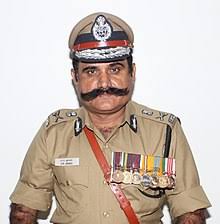
Chief Minister of Tamilnadu, Jayalalithaa ordered intensive action against the culprits. Director General of Police S. R. Jangid along with Additional Director General of Police Sanjay Arora led a team to investigate.
S.R.jangid
Soon after the start of the investigation, the team were able to match the fingerprints with the modus operandi of the gang. They speculated that the murders were carried out by a same group in different parts of India. The team coordinated with the UttarPradesh Police and central intelligence agencies. Following specific information, The team raided a house in Kannauj in the early hours. With reinforcement from the U.P. Special Task Force, they nabbed Bawaria and his wife Beena Devi as they were preparing for a major dacoity nearby.
Beginning in January 2005, the team nabbed ten Bawaria gang members in various parts of the country along with four trucks used by them.After their arrest, no dacoity cases were logged in the northern districts.
Over the course of the next eight years, the team hunted down the criminals and finally they found the remaining gang members in Rajasthan.
There is a movie released in telugu and tamil languages named “khakhee” based on real story of operation Bawaria.
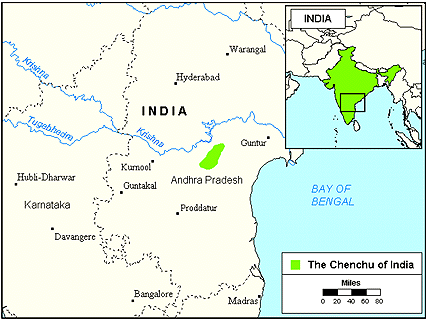
The Chenchus are Adivasi, a designated Scheduled Tribe in the Indian states of AndhraPradesh , Telangana, Karnataka and Odisha. They are an aboriginal tribe whose traditional way of life has been based on hunting and gathering. The Chenchus speak the Chenchu language, a member of the Dravidian language family. In general, the Chenchu relationship to non-tribal people has been largely symbiotic. Some Chenchus have continued to specialize in collecting forest products for sale to non-tribal people. Many Chenchus live in the dense Nallamala forest of Andhra Pradesh. They are also known as Chenchu Reddies in Rayalaseema because they use reddy title.
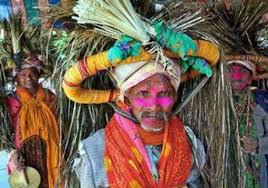
AT THE TIME OF FESTIVAL
The origin of the Chenchus, is connected with the Lord Mallikarjuna of the Srisailam temple, who was the personification of the Lord Shiva. Once their lived husband and wife in the small hut near the Srisailam temple. Both of them were very happy with their life but they had no children. They pay homage at number and temples and worshiped many deities but were in all vain. One day they of them were haunting in the forest. On returning back they found Lord Mallikarjuna in the forest and told him about their sorrow. Lord Mallikarjuna granted their wish on one condition that they would dedicate their child to him. They both adreed and after nine months when the women gave birth to the female child, she dedicated her to the Lord Mallikarjuna. In the three years of age the girl child left her parents and started living in the forests under the Chettu tree. As she was living under the chettu tree she was called as the Chenchita. One day, while roaming in the jungle she met Lord Mallikarjuna and felt in love with him. He was also attracted to the girl and married him. The descendants are called Chenchus, which means children of the girl who was living under the cheetu tree.
Chenchus talk in Chenchu language with the Telgu accent. Their language is also known as Chenchucoolam, Chenchwar, Chenswar or Choncharu. Chenchus have short height with long head, well defined eyebrows with the flat nose. They have jet black curly hair and their complexion varies from wheat gray to brown. Chenchus have broad faces. They are characterized by independence and personal freedom. Young people are free to marry whomsoever they like and can get apart whenever they like. Their present habitat is confined to the rocky hills of the in the Nallamalai hills, extending on both sides of the Krishna River. They live in bee hive shaped tiny huts with wattle walls. Chenchus are good climbers.
Chenchus live in the forest areas. They move in groups in the forests searching for the fruits, roots, tubers and honey. They make leaf cups and leaf plates out of tobacco leaves, tamarind, mahua flowers and sell them in the local marker, where they are in the great demand. They also make use of the mahua flower in making the liquor, sell able in the market. Chenchus love smoking and make tobacco cigarettes consumed by themselves. Honey is the favoutite among them all. Chenchus are good haunters, they can be seen haunting for the animals like deer, wild boar, rabbit, wild cock, rat and birds. They use bow and arrow for haunting. Apart from root, tubers, and fruits, Chenchus love eating money fresh.
Chenchus worship number of deities. They mainly believe in Bhagaban taru who lives in the sky and look after the Chenchus in all their doings. Another deity they worship is Garelamai Sama, who is the Goddess of forest. She is believed to protect them from the danger, especially when they are in the jungle. Apart from these they pay homage to Potsamma- the God who cures the diseases like the small pox and Chicken pox, Gangamma, the deity of water, Mayasamma, the deity who protects the Chenchus from enemies. Chenchus have also adopted certain religious practices from Hindus.
Alcoholism is a serious problem for many of the Chenchu. Their addictions allow them to temporarily escape from the reality of their difficult lives, but they need to find the permanent source of peace. Missions agencies focusing on the Chenchu have had very little success. Prayer is the first step toward reaching these precious people with the Good News.
Within the tribe, there are a number of differences between the older and younger generations. The older people remain rather scantily dressed, while the younger boys like to wear shirts and pants. Girls still wear the traditional sarees (colorful wrap-around dresses) or skirts and blouses, and some may wear more modern styles. Traditionally, both the men and women wore long hair that was tied up in a knot. Today, the older generation still lets their hair grow long, but the young people often cut their hair.
The Andh are a designated Scheduled Tribe in the Indian states of Telangana and Maharashtra. They seem to have originated in southern India in the vicinity of Madras which was once ruled by the Andhra dynasty. However the identification is only used for the people who by the start of the 20th century had a long history of residence in central India. The Andh are a designated Scheduled Tribe in the Indian states of Telangana and Maharashtra.
Andh claim themselves to be the original descendants of Andhra dynasty or Satvahana dynasty that ruled between third century BC to second century AD. The word Andh is derived from the word Andhra community . The Andhs live primarily in the hills of the Adilabad district in Andhra Pradesh. They are further subdivided into the Vertali and the Khaltali. The Vertali consider themselves as superior people and avoid marrying the Khaltali. Andhs are dark in complexion,with thick lips, and prominent cheeks bones. “It seems highly possible that the word Andh is only a corruption of the Sanskrit ‘Andhra’, a designation given by the ancient Aryans to an aboriginal Tribe dwelling in the Andhra Desh ” .
In Maharashtra the Andh community comprise 474110 population (census 2011). Andh people are distributed in Parbhani, Nanded, Yeotmal, Akola districts mainly. They called them self Hindu and are relatively well progressed in education. According to the Anthropological Survey of India, there are over 74,000 Andhs in Maharashtra. These Andhs speak Marathi. The Andhs are primarily Hindus.About 100,000 Andh speak the Andh language. In Maharashtra the Andh community comprise 474110 population (census 2011). Andh people are distributed in Parbhani, Nanded, Yeotmal, Akola districts mainly. They called them self Hindu and are relatively well progressed in education.
They are considered as the non-Aryan tribe belonging to the Tamil country. In the past, the region of the Andhra dynasty expanded across the southern region of the country. The Andh is segregated into two endogamous groups, namely, Vartali and Khaltali. Andh tribes comprising the Vartali segments are considered to be elites, while those falling into Khaltali segments are commoners. Intermarriage is prohibited between them. Again, Andh tribes are further divided into a number of exogamous family lines mainly carrying the surnames ‘Intiperlu’. These clans are named after some animals or plants. Some of the names are Majiria the cat, Baghmare means tiger killer, Titawe from Titawa, which means a bird, Dukare from Dukar, meaning a tiger, Ringni, a type of tree, Dumare from Dumar, meaning an ant-hill.
Marriage ceremonies of Andh tribe resemble the wedding ceremonies of Kunbi tribe. Engagement ceremony is arranged between the months of October and December in Andh tribal communities. And the wedding usually takes place in between January and April. In Andh tribal societies, polygamy is also allowed. Widow re-marriage is widely prevalent among Andh tribes. However, no widow is allowed to remarry the brother of his late husband. Remarriage with other members of the same family line is also not accepted. Divorce is also permitted. In their societies, dead are usually buried. They bury the dead with its head facing the south direction in contrary to the customs of Hinduism.
Andhs are non vegetarians although they avoid consuming beef. Andhs are mainly agriculturists by profession; many of them work as labourers also. There are only few people who live on forest products that they have accumulated during hunting. Fishing too is also prevalent. They have caste committee or Panchayat. The general customs and traditions of Andhs reflect their aboriginal origin. Andh tribes are going for minimum education.
First Andh tribe to elect as public representative.
Pote Shobhabai, belonging to Andh tribe, became the first-ever public representative from her tribe, which is categorised as Particularly Vulnerable Tribal Group, after she was elected Indervelli Mandal Parishad president on Friday. A resident of Dasnapur village, she represents the same Mandal Parishad Territorial Constituency for the BJP. The Andh is a tiny Adivasi community, its population being around 10,000 as per the 2011 Census. The tribe is scattered mainly across Adilabad and K.B. Asifabad districts. There are a few teachers from this tribe, but it is mostly mired in poverty.
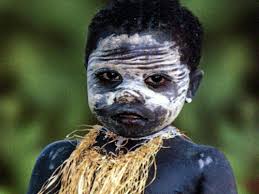
Jarwas is the name of a tribal community which is residing in Andaman & Nicobar Islands. They live in parts of South Andaman and Middle Andaman Islands, and their present numbers are estimated at between 250–400 individuals.
In 1857 Captain John Campbell, a senior British Officer and consultant for the Council of Indian Government, wrote in favor of selecting the Andaman Islands as a penal settlement. “Convicts cannot be prevented from escaping when working on the mainland, but they cannot get away from the Andamans, as the savages are far too hostile to allow one to escape.” J. Walker, reporting to C. Beadon, Secretary to the Government of India, stated that within ten months, 240 of the first shipload of 733 convicts had been found killed by native arrows in the vicinity of the penal settlement. Seventy prisoners were reported to have escaped and disappeared without trace .
In the early twentieth century, Port Blair was developed as an administrative seat and the region around it was developed using prisoners from mainland India. The forest was cleared with the aid of Andamanese tribal people (of the Aka Bea and Kol groups) who were employed as guides. The Jarwas, the tribal group discussed in this essay, frequently attacked the people they saw as invading their territory. In retaliation, Andamanese and Burmese forest workers and sepoys were often ordered to undertake “punitive expeditions.” Vacant Jarwa campsites in the deep forest were invaded by armed people, ransacked and set alight. Various objects such as metal implements, arrows, pots and baskets were seized and removed, mostly to establish if any escaped convicts were living among the Jarwas, a fact that was never really established. Reports suggest that face-to-face confrontation led to fatalities on both sides and to the capture of Jarwa women and children, who were then taken to Port Blair.
Frequently gunfire and arrows were exchanged at close range. Not only did this result in a loss of life on both sides, but “a great deal of blood” was found on the trail after the firing had ceased — but seldom were the Jarwas themselves traced. In a 1925 expedition, 37 dead Jarwas were accounted for, reflecting the intense nature of such punitive expeditions. Similar contact, violence and destruction occurred on Little Andaman Island between the Ongee and settlers until the mid-1880s (Portman 1899).
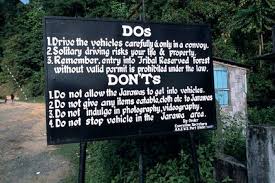
Jarwas are one of the last remaining tribes in this part of the world not to be assimilated to any degree with the outside society. Jarwas are confined to 765 square kilometers of forest, an area which has been declared a Jarwa reserve. This area was set apart by the Tribal Act of 1956 for the Jarwas’ use and to keep them contained and protected. Around its perimeter the number of settlers continues to increase. Whether these tribal groups should be kept isolated in a “human zoo” or encouraged to become part of the cultural mainstream is a long-standing question for India. The issue is complicated by the question of whether the Jarwas really know that a boundary exists between their forest and the forest beyond which is being invaded by the world. It is beyond doubt that Jarwas frequently experience non-Jarwas extracting wood and other forest resources, including wild pigs, a prime Jarwa food. The only indication that a boundary exists between them is a series of signs indicating the limits of Jarwa territory. Both Jarwas and non-Jarwas frequently cross over and the boundary remains a misunderstood notion, despite the presence of police to enforce it.
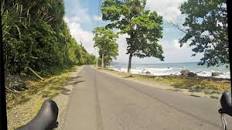
Since the completion of the Andaman Trunk Road in 1988, private and commercial traffic has begun passing through the Jarwa reserve. The 23 kilometer stretch of road has brought an increasing number of outsiders close to the Jarwas. Bus loads of people travel northward from Port Blair along this road accompanied by armed escorts from the Andaman Nicobar Police Force. During construction of the road, workers were often targeted by the Jarwas, and a police escort is now provided in case the Jarwa attack or try to stop vehicles passing through their territory. Drivers of all vehicles are expected to refrain from sounding their horns so as not to disturb any Jarwas hunting in the forest.
In the last 10 years police camps have been established within the Jarwa reserve to serve as warning posts and to protect settlers by scaring the Jarwas away with gunfire. The police, while originally intending to protect the Jarwas, today are seen as a force for the protection of settlers. In October 1991, Jarwas attacked the police camp at Jhirkatang and one policeman was killed. In defense (or retaliation) the police claimed to have fired three hundred rounds “in the air.” According to the Jarwas, the individual killed in this attack was a poacher of wild pigs within the Jarwa territory. Settlers, on the other hand, tell of brave individuals who defended themselves against the “wild savages” in the forest.
In 1970 the Jarwas were officially contacted by the Indian government. Since 1974, contact with the Jarwas on the western coastline has been regular, systematic and increasingly friendly. These contacts are organized by the government-administered agency for tribal welfare known as Andaman Adim Jan Jati Vikas Samiti (AAJVS). Every full moon and depending on the weather, AAJVS organizes a team of people who travel by boat to the western coast of Middle Andaman via Kadamtalla. The team includes administrators, a doctor, an officer from the statistics department and an anthropologist from the local anthropological survey office.
As the ship reaches the coastline it starts sounding its horn, searching for Jarwas moving out from the forest. Upon sighting the Jarwas, the ship is brought to a halt and smaller motorboats are loaded with raw bananas, coconuts, strips of cloth, metal pots and nails. While members of the contact party make their way to the sandy coastline, in another boat members of police, not allowed to land on the beach, remain on alert for any undesirable events. On average about 20 people are contacted at any given spot. Sometimes only women and children are contacted. At other times a large group of 50 to 60 appear.
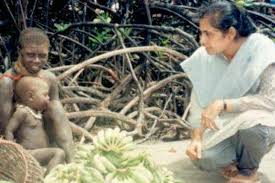
As the boat loaded with gifts approaches the beach, the Jarwas, with their woven baskets, come out to meet it scrambling for the gifts brought by the contact party. The Jarwas try to pick up what they can and fill their baskets. Often the other members of a family help: picking up what they can and filling baskets, depositing their contents on the beach and returning to collect the next load. Running between the boat and the beach the Jarwas sing in a repetitive chant-like tone. As gift items are unloaded and distributed among the Jarwas, the contact party disembarks and cautiously moves among the Jarwas congregated at the beach. On occasions the distributed food is shared between the Jarwas and the contact party. During this time the contact party makes audio and photographic records, notes the number of Jarwas present, whether there are any visible signs of sickness, injury, or if there is anyone needing medical attention.
The Jarwas are also involved in their own observation of the contact party. Variations in body size and shape, the clothes and skin of the contact party are carefully scrutinized by the Jarwas. Sometimes they mimic the sounds most often repeated by the contact parties. Over time the Jarwas have learned that the contact party has instruments like tape-recorders, cameras, and video cameras. The Jarwas have heard the tapes played back to them; they have seen what the world looks through the viewfinder of a camera. On some occasions Jarwas have shown the contact party objects like eyeglasses, metal pots, clothing and camera cases procured on the previous contact event. Generally within three to four hours the event is brought to an end. Slowly the Jarwas begin picking up their loads of gifts and start moving into the forest. The contact party waves goodbye to the Jarwas and returns to the ship.
Many of the observations made in this way have confirmed what was known about the Jarwas since the days of British occupation of the islands, and much of the basic information has remained constant (Temple 1903, Portman 1899; Sarkar 1990). But information gathered in the span of a short contact encounter repeated three to five times a year is subject to range of interpretations and misrepresentations. There is no systematic record of the people contacted, even the number of Jarwas living in the region is not definite. It is even questionable whether the Jarwas refer to themselves as Jarwas or not. Some administrators have questioned the benefit of these contacts to the Jarwas (see this issue’s Not in the News page 42). Most of the people involved in the contact event regard it as an extremely tiring and risky chore that they have to do and that they would like to get it over with quickly. After the event, a radio signal is sent to Port Blair that the mission was successfully accomplished under the leadership of the senior government staff member accompanying the team. The estimated number of Jarwas contacted is relayed. This information is broadcast on the radio news across the whole island.
The contact event and the contact team’s role have changed over time, as has the Jarwas’ response to them. In the early contact phase, items like cooked rice and plastic trinkets were distributed. Soon it was realized that such items were a health hazard and a cultural imposition, and such distributions were stopped. Also, the right to join the contact party is now strictly controlled. Gone are the days when any visitor of importance was allowed to accompany the contact team in order to see the “exotic primitives living in harmony with nature.” Those involved with the Jarwas over long periods of time are split among themselves about the objective of the mission: some feel that regular contact instills mutual trust and encourage the Jarwas to join the mainstream of society; others feel that nothing is accomplished or learned by any involved.
A policy that is no longer encouraged is the embarkation of Jarwas on board the contact ship. This was reviewed after an incident in 1977 when two Jarwa men, having spent time in Port Blair, were returned with the hope that they would carry the message of trust and goodwill. Soon after, five poachers were killed by Jarwas in the region where the visitors to Port Blair had been dropped. Eventually the contact parties stopped bringing Jarwas to the Uttara Jetty of Kadamtalla where they, and the non-Jarwas, had become a curious exhibition for each other (AAJVS 1994). Yet, as late as 1983-84, the Jarwas exhibited eagerness to come on board the main ship and, if possible, take more gift items, including any piece of metal they could disconnect from the ship’s decking. Some veteran members of the contact party remember that in the earlier days of contact the Jarwas were like mischievous children who would not hesitate to take things from the contact party members and hide them away. Incidents like these raise questions about boundaries, authority and power relations. The evidence suggests that the Jarwas understand the relations of power but not the boundaries that, from the authorities’ point of view, limit them.
Jarwa looking at the bus
The news of successful Jarwa contact often raises the question: What has been achieved by such events? Some islanders feel that more vigorous efforts should be made to transform the Jarwa; that they should be made to give up their wilderness existence and be civilized quickly. Some from Ferargunj in the Andaman Islands said to me, “Giving little gifts here and there is not achieving anything. It is just a slow and corrupt way of scheming off money in the name of tribal welfare! In fact, it is making the Jarwas learn to depend on all assistance being given by the outsiders.” A school teacher in Tirur said, “Look there is a lesson of history that we are ignoring: outsiders continued to give help and all forms of assistance to the Great Andamanese and made them settle down in Strait Island. Are they self-sufficient and happy today?” The Great Andamanese is a group of 20-odd individuals of conflicted cultural identity: caught between being citizens of India and expecting special treatment, they are descended from a significant tribal group that has dramatically dwindled.
Some students at Tirur settlement pointed to the overlooking hills and said that they were aware of the fact that Jarwas can come out from the forest. In 1991 the Jarwas came out and killed an eight-year-old boy who was playing at the edge of the fields while his sister watched the family’s cattle. The school children, on being asked what they thought Jarwas were, narrated a story about the de-evolution of trained elephants that were left behind by timber contractors after the Second World War, eventually becoming fetal in the forest. “The Jarwas are like the elephants: they came from some kingdom across the sea and got stranded in the forest here, and over a period they forgot all their civility and shame. They became wild.”
While many villagers feel that the nature of the contact with the Jarwas should be changed and accelerated to civilize and discipline them, Port Blair residents, many with a commitment to environmental heritage, feel very differently. In their view, contact is not only useless, it is destroying the autonomous, healthy, natural exist ence of the Jarwas as hunters and gatherers. They feel that all contact with the tribes like Jarwas should be completely stopped.
Even if it were decided that contact with the Jarwas should cease, the question remains: Will the Jarwas stop contacting non-Jarwas? One of the major concerns of the growing number of settlers around the Jarwa reserve forest is the occurrence of incidents associated with Jarwa hostility. Jarwas come out to the small settlements, carrying away clothes hanging outside, metal utensils and tools; consume fruits from planted banana and coconut trees, destroying fences and the thatching of the houses; dogs or livestock have been killed with arrows. To a degree, the settlers around the Jarwa reserve forest are now used to these incidents. They report them to the local administration when they happen and claim compensation. Each person killed by Jarwa results in a government payment of about $350 as compensation for the loss. All hostile attacks involving death are registered as crimes under the Indian Police Code. However, in practice, the courts tend to accept the final report of the police that the accused could not be traced or arrested and the criminal case against Jarwas is often abandoned. What settlers fear most are the occasions on which Jarwas appear to have selectively killed individuals in the settlement. People believe that those who are targeted by the Jarwas have often been spotted by the Jarwas in the forest trying to hunt or extract forest products, both of which are prohibited activities.
The folk notion that Jarwas punish settlers involved in illegal activities is questionable however, since it implies that the Jarwas seek out these culprits. It is not even clear that the Jarwas recognize the boundaries that separate them from the settlers and contacts with the Jarwas are such that their version of these events cannot be elicited.
Yet it cannot be denied that Jarwas resent outsiders exploiting their forest. Occasionally, a settler’s body is recovered from the Jarwa reserve; while bodies mutilated with Jarwa arrows have been recorded at local police stations as “killed by the Jarwas within the reserve forest.” The settlements that the Jarwas are most likely to raid are those nearest the Jarwa forest and settlers have chased Jarwas away by firing guns or have been shot at by Jarwas arrows. Available records for 1983-88 indicate that 28 hostile incidents were reported to administration. Of these, 20 attacks were in settlements and eight in the reserve forest. In the period from 1946-61, 76 encounters were registered at the district headquarters and 15 settlers were killed, no records exist of Jarwa losses for this period. In most of the reported incidents of Jarwas entering settlements, death is infrequent (Mann 1973). It must be noted that there are no records of damages and losses sustained by the Jarwas. Nothing is recorded or reported about how the settlers may have hurt or killed the Jarwas while conducting prohibited activities in the Jarwa reserve forest. Historically, Jarwas never leave behind an injured or dead body and contact parties have often reported observing Jarwas with bullet wounds.
For other Andaman Islanders like the Ongees and the Great Andamanese different kinds of changes have taken place. One hundred and one Ongees continue to live on Little Andaman with various forms of government aid and welfare programs. Twenty-odd Great Andamanese are still settled on Strait Island. Both Ongees and Great Andamanese maintain a lifestyle different from the old ethnographic accounts, learning to count in Hindi and occasionally watching the video monitor. In comparison, the world of the Jarwas remains relatively unchanged.
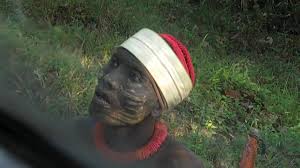
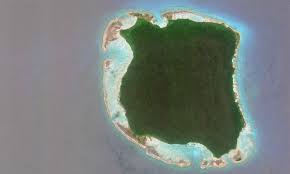
This is one of the Island present in Andaman and Nicobar Islands. The tribes living here are known as most ancient tribes in India.They are officially Indians but their language is not similar to any of the languages present in mainland of India and Andaman Islands.
The people present here do not allow any other people from outside of their land. They have less resistant power.There is an estimation that only 2000-4000 sentinelese are alive today. They may be the last surviving Pre-Neolithic tribe on Earth. They live on the North Sentinel Island, a 27-square mile island located 58 kilometers west of Port Blair, the capital of Andaman & Nicobar.
In 2006, the Sentinel killed two Indian fishermen who landed on their island. Earlier, in 2004, they had shot at an Indian Coast Guard chopper flying over the island to assess damage from the Indian Ocean Tsunami. It does’nt take an expert in Sentinelese language to understand their sentiment: this tiny tribe, located in one of the remotest parts of the Bay of Bengal, is saying two words clearly and unequivocally: Keep Out.
Many trails have been done by many Anthropologists. But no one succeeded in establishing friendly contact with them. Before our independence a british officer succeeded in establishing a friendly contact.He tried to take 2 elders and 4 teenagers from sentinel island to normal world.But when they got a little away from the Island the two elders died . So,he took the teenagers back to Island.From this we can know that the sentinel tribes cannot adjust to normal world climate due to their resistant power.
A person want to make a documentary on sentinel tribes and tried to go to their place. But the tribes shoot them with arrows.There is no life loss happened but an arrow made an injury to the director thigh. Again some Anthropology team tried to impress them by giving gifts like coconuts,vessels,etc. The tribes took coconuts and some vessels.But they also failed to enter into the island.
The First contact
A group of anthropologists sent a pig into the island .The sentinel tribes killed that pig and buried it at the sea shore.
A woman Anthropologist succeeded in establishing a friendly contact with them. The rules followed by the sentinel tribes made her alive.The rule is”They will not kill or harm the person who are saved by the sentinel people”. A sentinel women saved the Anthropologist from an arrow.So she succeeded in making contact with them.But she failed to know more about them.
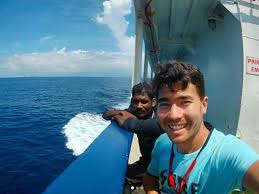
Recently a person named John Allen Chau tried to enter to sentinel Island illegally. But he was killed by them.
John Allen Chau
Now Indian government totally restricted entry of the outsiders to the island to ensure the safety of both the people and tribals. The 3 km from the island is also made as restricted place to enter.