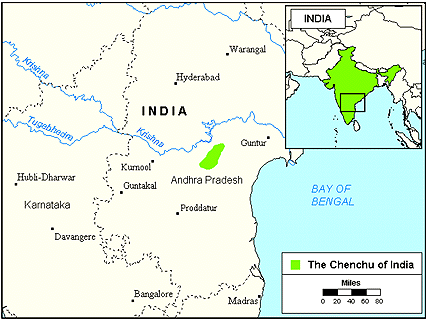
The Chenchus are Adivasi, a designated Scheduled Tribe in the Indian states of AndhraPradesh , Telangana, Karnataka and Odisha. They are an aboriginal tribe whose traditional way of life has been based on hunting and gathering. The Chenchus speak the Chenchu language, a member of the Dravidian language family. In general, the Chenchu relationship to non-tribal people has been largely symbiotic. Some Chenchus have continued to specialize in collecting forest products for sale to non-tribal people. Many Chenchus live in the dense Nallamala forest of Andhra Pradesh. They are also known as Chenchu Reddies in Rayalaseema because they use reddy title.
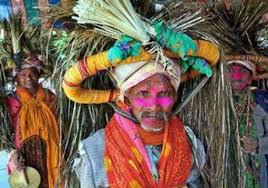
The origin of the Chenchus, is connected with the Lord Mallikarjuna of the Srisailam temple, who was the personification of the Lord Shiva. Once their lived husband and wife in the small hut near the Srisailam temple. Both of them were very happy with their life but they had no children. They pay homage at number and temples and worshiped many deities but were in all vain. One day they of them were haunting in the forest. On returning back they found Lord Mallikarjuna in the forest and told him about their sorrow. Lord Mallikarjuna granted their wish on one condition that they would dedicate their child to him. They both adreed and after nine months when the women gave birth to the female child, she dedicated her to the Lord Mallikarjuna. In the three years of age the girl child left her parents and started living in the forests under the Chettu tree. As she was living under the chettu tree she was called as the Chenchita. One day, while roaming in the jungle she met Lord Mallikarjuna and felt in love with him. He was also attracted to the girl and married him. The descendants are called Chenchus, which means children of the girl who was living under the cheetu tree.
Chenchus talk in Chenchu language with the Telgu accent. Their language is also known as Chenchucoolam, Chenchwar, Chenswar or Choncharu. Chenchus have short height with long head, well defined eyebrows with the flat nose. They have jet black curly hair and their complexion varies from wheat gray to brown. Chenchus have broad faces. They are characterized by independence and personal freedom. Young people are free to marry whomsoever they like and can get apart whenever they like. Their present habitat is confined to the rocky hills of the in the Nallamalai hills, extending on both sides of the Krishna River. They live in bee hive shaped tiny huts with wattle walls. Chenchus are good climbers.
Chenchus live in the forest areas. They move in groups in the forests searching for the fruits, roots, tubers and honey. They make leaf cups and leaf plates out of tobacco leaves, tamarind, mahua flowers and sell them in the local marker, where they are in the great demand. They also make use of the mahua flower in making the liquor, sell able in the market. Chenchus love smoking and make tobacco cigarettes consumed by themselves. Honey is the favoutite among them all. Chenchus are good haunters, they can be seen haunting for the animals like deer, wild boar, rabbit, wild cock, rat and birds. They use bow and arrow for haunting. Apart from root, tubers, and fruits, Chenchus love eating money fresh.
Chenchus worship number of deities. They mainly believe in Bhagaban taru who lives in the sky and look after the Chenchus in all their doings. Another deity they worship is Garelamai Sama, who is the Goddess of forest. She is believed to protect them from the danger, especially when they are in the jungle. Apart from these they pay homage to Potsamma- the God who cures the diseases like the small pox and Chicken pox, Gangamma, the deity of water, Mayasamma, the deity who protects the Chenchus from enemies. Chenchus have also adopted certain religious practices from Hindus.
Alcoholism is a serious problem for many of the Chenchu. Their addictions allow them to temporarily escape from the reality of their difficult lives, but they need to find the permanent source of peace. Missions agencies focusing on the Chenchu have had very little success. Prayer is the first step toward reaching these precious people with the Good News.
Within the tribe, there are a number of differences between the older and younger generations. The older people remain rather scantily dressed, while the younger boys like to wear shirts and pants. Girls still wear the traditional sarees (colorful wrap-around dresses) or skirts and blouses, and some may wear more modern styles. Traditionally, both the men and women wore long hair that was tied up in a knot. Today, the older generation still lets their hair grow long, but the young people often cut their hair.
 santhoshi's blog