The story of Bawrias is very intresting and thrilling.Today you are gonna know many facts about them.
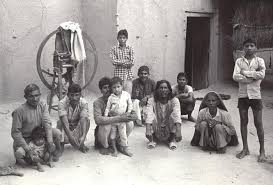
The Bawaria people were once part of the powerful Hindu Rajput caste. During a fight between the Mughals and the Rajputs, a Bawaria individual foolishly polluted the bauli with cow’s blood, which prevented the Rajputs from bringing their soldiers back from dead. When the Rajputs were defeated, the Bawarias were exiled to the jungle to spend their days eking out an existence by hunting and gathering. Worse yet, they were now outcastes, a huge step down from their former status. They still consider themselves to be Rajputs, but other communities would not agree, though they have higher status than most outcastes.
They were known to use a noose for hunting, so their name is derived from a word for noose. Some of them still make ropes, but they are much more likely to be farmers The Bawaria people were once part of the powerful Hindu Rajput caste. During a fight between the Mughals and the Rajputs, a Bawaria individual foolishly polluted the bauli with cow’s blood, which prevented the Rajputs from bringing their soldiers back from dead. When the Rajputs were defeated, the Bawarias were exiled to the jungle to spend their days eking out an existence by hunting and gathering. Worse yet, they were now outcastes, a huge step down from their former status. They still consider themselves to be Rajputs, but other communities would not agree, though they have higher status than most outcastes. They were known to use a noose for hunting, so their name is derived from a word for noose. Some of them still make ropes, but they are much more likely to be farmers .
Most are Hindus, though there are a smaller number Muslims and Sikhs among them. We know of no followers of Christ among this community that believes in the power of evil spirits, charms, amulets, and magic.
The Bawarias are notorious for a whole host of crimes – murder, rape, burglaries and/or assaults – and their name is enough to send shivers down the spines of villagers and even the police.
Five men allegedly part of UP’s infamous Bawariya gang were arrested on Monday on suspicion of being involved in the gang rape of a woman and her teenage daughter in Bulandshahr. The family who witnessed the rapes have now identified three of their attackers from among the arrested men.
A reconstruction of the crime shows the gang first waylaid the family on their way from Noida to Shahjahanpur, then raped two women members of the family and looted them of their cash, jewellery and mobile phones.
The Bawariyas usually split and operate in groups – comprising both men and women, and sometimes even children. They are widely known for attacking houses built in near-vacant areas around highways or railway tracks. The Bawariya women are responsible for surveying and identifying potential victims. They pose as utensil or cloth sellers to do a recce of the house they plan to attack. Sometimes, even kids are involved in the surveying process. Before they begin ‘hunting’, the groups choose a spot near highways or railways where their women ceremoniously bid them goodbye. After 15-20 days, gang-members return to the spot to divide their booty. When they attack, the Bawariyas aim for the head so they can easily commit the crime. Also, they leave behind their weapons and mobiles to avoid being tracked or identified.
Bawariyas arrested in the past have never given any clues about the rest of their tribe. Early this year, three Bawariya members were arrested for abducting and raping a private hospital nurse in Jaipur. During investigation, police found that six men riding two bikes thrashed the nurse and forced her to sit on their bike before raping her at an isolated spot.
Rainy season marks the arrival of Bawariyas , the gang considers it an auspicious time to commit crime. Sometimes the gang is also referred to as the ‘Kaccha Banyan gang’ as they preferred to dress in underwear – white vests and striped knickers. It is believed that gang-members are now turning to more traditional forms of clothing to prevent detection by the police. One of the primary reasons police struggle to catch the gang is because they’re known with different names in different areas – ‘bhaatu’, ‘ghumantu’, ‘criminal trap’, ‘mewaiti’, ‘saasi’ and ‘kangda’ are some of the other names given to the Bawariya gang .
In April 2015, police arrested five men off a bus in Mathura who turned out to be Bawariyas. Rs 5 lakh, gold jewellery and chains, country-made pistols, live cartridges and nine mobiles were recovered from them, among other things. The arrested gang members revealed that they had a pattern of shifting to new grounds after committing crime at one spot. Then, in July, they arrested five gang members from Ghaziabad who had a Scorpion SUVamong other things in their possession. Later in September, in Kanpur’s Maharajpur area, the ‘kaccha baniyan group’ beat two men to death and then went on to assault a couple who tried to resist robbery. Eighteen days later, people of Maharajpur’s Jahana village lynched a man to death suspecting he was part of the gang. In November the same year, a Bawariya member was arrested in Gurgaon for carrying out dozens of chain-snatchings in Bengaluru. There are many crimes they have done at different places like this.
Operation Bawaria took place on 2005 January. Operation Bawaria was an operation by Tamil Nadu Police against organized dacoity, murder and robbery that were prevalent in residential areas near the National Highway during 1995 – 2006 that was carried out by the notorious group of North Indian lorry drivers who belonged to Bawaria community.
OPERATION BAWARIA:
The operation was launched by Tamil Nadu Police in January 2005 soon after the murder of AIADMK Gummidipoondi MLA Sudarsanam when armed dacoits struck affluent houses surrounding the National Highway in Tamil Nadu, Karnataka and Andhra Pradesh.
Bawaria was the prime suspect in dacoities in which many prominent figures including Salem district Congress committee president Thalamuthu Natarajan and Dravida Munnetra Kazhagam functionary Gajendran, were killed. The modus operandi was to target affluent families while transporting goods from north to south in trucks. After unloading the goods, they would strike at the houses and resort to “unprovoked” violence, causing fatal injuries. In Sriperumbudur, they killed a schoolgirl and injured her parents grievously while committing a dacoity. Bawaria was wanted by the police in nine States for his involvement in about 200 major dacoity cases. One of his recent operations was at Gummidipoondi where AIADMK MLA Sudarsanam, was shot dead and his house looted.
Chief Minister of Tamilnadu, Jayalalithaa ordered intensive action against the culprits. Director General of Police S. R. Jangid along with Additional Director General of Police Sanjay Arora led a team to investigate.
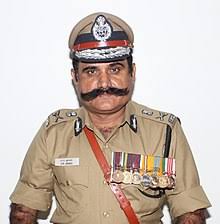
Soon after the start of the investigation, the team were able to match the fingerprints with the modus operandi of the gang. They speculated that the murders were carried out by a same group in different parts of India. The team coordinated with the UttarPradesh Police and central intelligence agencies. Following specific information, The team raided a house in Kannauj in the early hours. With reinforcement from the U.P. Special Task Force, they nabbed Bawaria and his wife Beena Devi as they were preparing for a major dacoity nearby.
Beginning in January 2005, the team nabbed ten Bawaria gang members in various parts of the country along with four trucks used by them.After their arrest, no dacoity cases were logged in the northern districts.
Over the course of the next eight years, the team hunted down the criminals and finally they found the remaining gang members in Rajasthan.
There is a movie released in telugu and tamil languages named “khakhee” based on real story of operation Bawaria.

